During a Senate hearing, two nominees for the Commodity Futures Trading Commission (CFTC) declined to take a stance on the issue of sports-based contracts. Meanwhile, Selig has pledged to pursue the dispute with the states “all the way to the Supreme Court.”
On the Senate front, new legislation concerning prediction markets may soon emerge. Senator Ted Cruz indicated that he and Senator Maria Cantwell are nearing an agreement on a bill designed to protect state-level gambling regulatory authorities.
In terms of business developments, Kalshi has acquired the broker-dealer FB Securities in preparation for the launch of equity trading, while Novig has expanded its sports partnerships to include the NBA and seven NHL teams. Additionally, following a CFTC inquiry into potential market manipulation, Kalshi has suspended certain prediction markets related to Donald Trump.
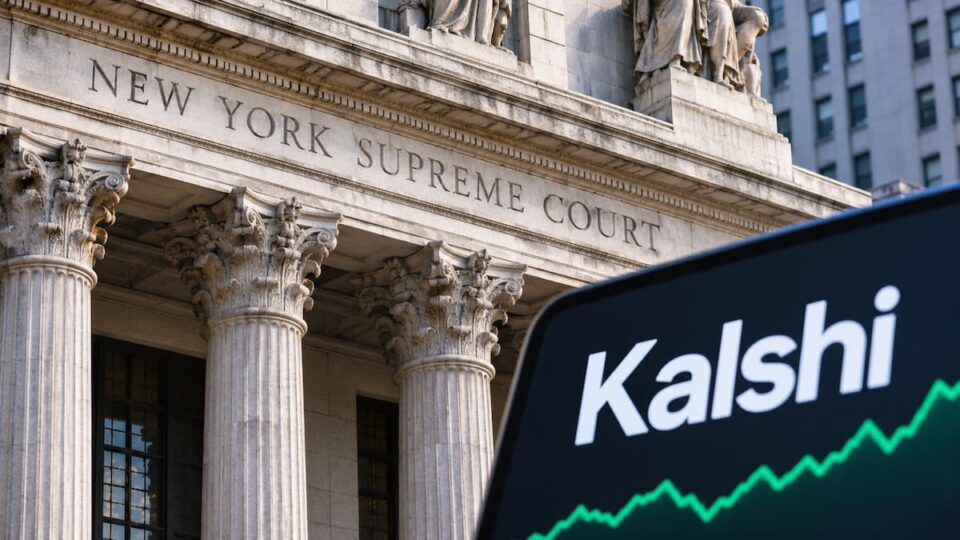
A federal judge has remanded New York State’s enforcement action against Kalshi back to state court, opening the door for the state to resume its efforts to restrict the operator. Concurrently, both Kalshi and Novig are seeking access to state-maintained self-exclusion lists for gambling, and Coinbase is planning to launch its own event-based contracts.
Furthermore, the U.S. Senate has passed legislation targeting prediction markets based on human mortality; Allwyn has reported strong growth for PrizePicks; Chicago has issued its first video gambling licenses; and the incoming governor of Alabama has renewed calls for gambling reform.
Major Development: New York’s Case Against Kalshi Returns to State Court
A federal judge has granted New York State’s request to remand its enforcement action against Kalshi to state court. U.S. District Judge Vernon Broderick rejected the operator’s argument that the case should remain in federal court.
The lawsuit, filed in July by New York Attorney General Letitia James, alleges that Kalshi has violated state law by operating an unlicensed gambling business. Kalshi has removed the case to federal court, arguing that its status as an exchange regulated by the U.S. Commodity Futures Trading Commission (CFTC)—combined with the federal legal questions involved—is sufficient to establish federal jurisdiction.
However, Broderick rejected these arguments. He reasoned that the claims brought under New York state law do not require an interpretation of the Commodity Exchange Act (CEA). He explained that Kalshi’s invocation of federal authorization serves merely as a defense against the state’s allegations, rather than as a basis for federal jurisdiction.
Broderick also highlighted the long-standing authority of states to regulate the gambling industry. He concurred with an earlier ruling from a New York federal court, which held that the Unlawful Internet Gambling Enforcement Act (UIGEA) leaves room for states to exercise their traditional regulatory powers.
Kalshi immediately sent a letter to the state supreme court, requesting that it deny any new applications for a temporary restraining order and asking for a status conference to be held as soon as possible.
The Daily Telegraph
Kalshi and Novig Seek Access to State Self-Exclusion Lists for Gambling
Despite ongoing disputes with state gaming regulators, Kalshi and Novig are seeking to collaborate with states to strengthen protections for responsible gambling.
According to a report by Bloomberg, the two prediction market operators sent a joint letter to 35 states requesting access to databases of individuals who have voluntarily opted out of regulated gambling activities—known as “self-exclusion” lists.
Although prediction markets maintain that they offer financial products rather than gambling products, advocates for responsible gambling have long pushed for the implementation of such self-exclusion mechanisms. Both Kalshi and Novig have already put similar self-exclusion tools in place. In a letter to state regulators—reviewed by Bloomberg News—lawyers for Kalshi and Novig wrote: “We believe that an individual’s right to self-exclude should not depend on where they live or which regulator oversees the platform. The current patchwork of independent state-level lists creates gaps, potentially leaving high-risk individuals unprotected.”
This move comes as both operators continue to grapple with state officials over the regulation of certain event-based contracts.
Coinbase is reportedly planning to launch an in-house prediction market by 2027.
According to reports, Coinbase intends to roll out its own event contracts in the first half of 2027. Currently, the company offers prediction markets through a partnership with Kalshi.
Citing a person familiar with the matter, Bloomberg reported that Coinbase plans to offer proprietary contracts to both retail and institutional clients.
Developing its own platform would grant Coinbase greater control over which contracts are listed and allow the company to retain a larger share of trading revenue. The firm has already taken steps to build the necessary infrastructure, including the acquisition of The Clearing Company and securing regulatory approval for clearing operations.
By offering prediction markets through its own exchange, Coinbase would be following in the footsteps of fintech rivals like Robinhood and Crypto.com.
Senate Passes “Death Wager” Bill
Prediction markets also made their way onto the congressional agenda this week.
On Thursday, the U.S. Senate passed the bipartisan “Death Wager” bill (S. 4035). The legislation would prohibit prediction markets from listing or clearing contracts related to terrorism, assassinations, war, or the death of individuals.
Introduced by Senators Adam Schiff and John Curtis, the bill was passed via voice vote, alongside an amendment in the nature of a substitute. According to the senators, the amendment clarifies that the legislation does not alter existing laws governing contracts on sporting events, nor does it affect ongoing litigation concerning state-level gambling regulations. Two days ago, Schiff and eight other senators demanded that the U.S. Commodity Futures Trading Commission (CFTC) withdraw a directive that would require prediction markets to remove geographic restrictions across the United States.
Separately, during a confirmation hearing, Schiff criticized CFTC Chair Michael Selig, accusing him of misleading lawmakers regarding his stance on prediction markets and his level of respect for the judiciary.
The bill will now move to the House of Representatives for consideration; it must be approved by the House before it can become law.
Allwyn Reports 29% Revenue Growth for PrizePicks in Q3
Prediction markets were also highlighted in the company’s financial results. Allwyn reported a 19% year-over-year increase in net revenue to €1.22 billion, driven in part by the acquisition of PrizePicks, a U.S.-based fantasy sports and prediction market operator.
According to Allwyn’s preliminary earnings report released Thursday, PrizePicks saw a 29% year-over-year increase in net revenue (on a constant-currency basis). Allwyn noted that PrizePicks has been a key driver of its EBITDA growth.
Allwyn’s North American net revenue reached €242 million, up from €55 million in the same period last year; however, the figures for the third quarter of 2025 do not include PrizePicks, which the company acquired in January.
The company noted that PrizePicks has expanded into digital card-draw games through its “Packs” product, which was launched after the quarter ended.
Chicago Issues First Video Gambling Licenses Despite Opposition from Bally’s
Chicago has begun issuing licenses for video gambling terminals (VGTs) to bars and restaurants—a move that extends beyond prediction markets into the realm of brick-and-mortar gambling. This follows the City Council’s legalization of VGTs nearly a year ago.
According to WTTW, 17 establishments have already received city-issued licenses, paving the way for video slot machines and other electronic gambling games.
The move has faced opposition from Mayor Brandon Johnson and Bally’s Corporation, which is currently constructing a $1.7 billion casino in the city. Bally’s Casino argues that the legalization of video gambling terminals violates its agreement with the city government and could harm the casino’s financial prospects. Johnson, meanwhile, suggests that video gambling terminals might cannibalize Bally’s revenue—a concern, given that the city government relies on Bally’s to generate significant tax income.
According to the mayor’s proposed 2027 budget, the city anticipates $3.3 million in revenue from video gambling. Should approximately 3,300 establishments eventually install these terminals, that figure is projected to rise to $6.8 million.
Tuberville Calls for Gambling Reform in Alabama by Early 2027
As Chicago introduces a new form of gambling, the conversation surrounding the expansion of gambling in Alabama is intensifying.
Tommy Tuberville, an elected official in Alabama, believes the state is missing out on opportunities to generate revenue from gambling operations already taking place within its borders.
According to 1819 News, Tuberville—speaking Thursday on the Mobile-based radio station FM Talk 106.5—suggested collaborating with the Poarch Band of Creek Indians to let voters decide whether to expand gambling activities.
He further indicated that lawmakers could address this issue early in the next legislative session, potentially through a special session.
Tuberville has previously expressed support for allowing voters to decide on the expansion of the gaming industry. He also noted that while the legislature should lead the effort, the Governor’s office should be directly involved in shaping the framework.
The results of the midterm elections have reignited the debate over gambling expansion in Alabama. In 2024, the state came closest to advancing a comprehensive gambling expansion package, which ultimately failed in the Senate by a single vote. Any constitutional amendment requires approval by a three-fifths majority in both chambers of the Alabama Legislature before it can be put to a vote by the public. YouGov: DraftKings Leads in Brand Awareness; Kalshi Ranks Ahead of Polymarket
According to new research released by YouGov on Thursday, DraftKings remains the betting brand that garners the most attention among U.S. adults, while Kalshi ranks higher than its competitor, Polymarket.
Based on a survey of over 12,000 U.S. adults, DraftKings leads with 8.9% of respondents indicating they would consider using the brand, followed by FanDuel (7.8%) and bet365 (5.6%). Kalshi ranks fourth at 4.6%, ahead of BetMGM (4.1%) and Polymarket (3.2%). However, bet365 leads significantly in customer satisfaction, with a net score of 81.9—well above DraftKings’ 55.3.
The research also found that prediction markets attract more interest from younger adults, with Polymarket reaching 7.8% among Gen Z respondents.
These findings measure brand awareness, not actual market share or customer activity.
Weekly Roundup: Prediction Markets
This week, litigation involving prediction markets remained a central focus, most notably with a split decision from a panel of the Fourth Circuit Court of Appeals regarding Kalshi’s case in Maryland. Each of the three judges reached a different conclusion.
Legal activity has also increased in Louisiana, where the state sought to remand an enforcement case—a move opposed by Polymarket. Meanwhile, a federal judge consolidated three related lawsuits; Kalshi voluntarily withdrew its separate filing to join the consolidated case. Additionally, Novig has initiated a lawsuit against the state of Ohio.
In Utah, Attorney General Derek Brown defended the state’s enforcement authority ahead of a hearing scheduled for Friday regarding the Commodity Futures Trading Commission’s (CFTC) request for an emergency injunction. In addition, Kalshi co-founders Tarek Mansour and Luana Lopes Lara have each retained legal counsel in connection with a criminal proceeding in Utah.
Beyond the litigation, the focus this week has been on the mounting political pressure facing the U.S. Commodity Futures Trading Commission (CFTC). Nine Democratic senators have called on the CFTC to rescind its directive prohibiting geographic restrictions, while 43 state attorneys general—along with the attorney general of the District of Columbia and Representative Dina Titus—have questioned a proposed CFTC rule that would classify sports-based contracts as swap transactions.