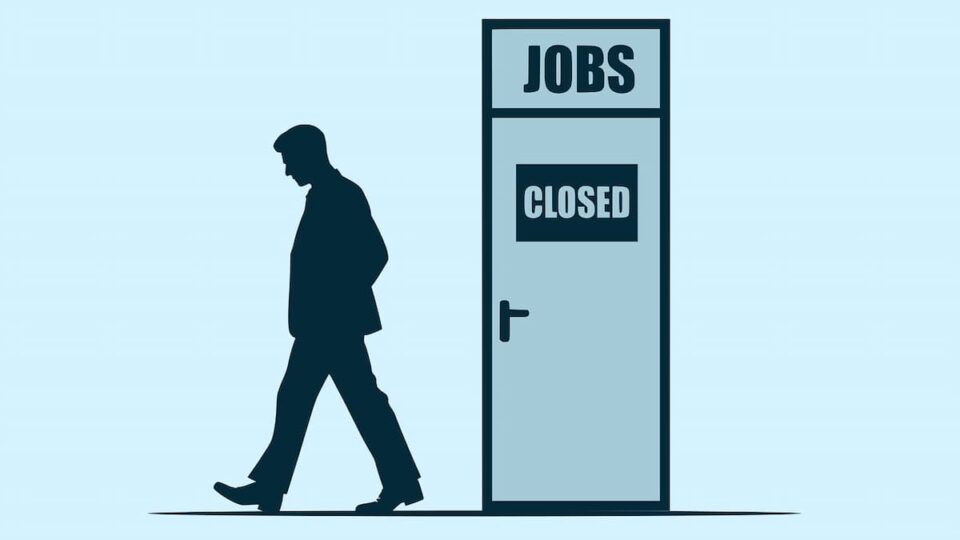
Following rumors of layoffs that circulated on social media last week, Polymarket has confirmed staff reductions as part of a corporate restructuring. Prediction markets have also come under scrutiny in Texas and within the U.S. Congress; a new bill in Texas proposes banning certain types of prediction contracts, while congressional discussions regarding the risks of gambling on college campuses have also touched upon the prediction market sector.
Major News: Polymarket Confirms Layoffs
Polymarket has confirmed that it is reducing its workforce and the number of contractors as part of an organizational restructuring. The company has not disclosed the exact number of individuals affected.
The affected roles include positions in marketing and creative departments, as well as broader personnel adjustments following several high-level leadership appointments. A spokesperson for Polymarket told Front Office Sports:
“As the company has grown and brought on new leadership, we have undergone a restructuring to prepare for the next phase of our development—which involves significant new hiring, personnel shifts, and the departure of some employees.”
Polymarket also refuted claims circulating on social media that it was laying off 30% of its staff. Citing an unnamed source, Reuters reported that more than half of those affected were contract workers.
Alongside these layoffs, Polymarket has recently made a series of key executive hires, including former Uber executive Travis VanderZanden as Chief Growth Officer, Warren Jenson as Chief Financial Officer, and Lisa Mantil as Head of Institutional Growth.
The Daily Telegraph
Texas Bill Proposes Ban on Certain Prediction Market Contracts
As prediction market companies pursue growth, lawmakers are increasingly proposing restrictions on the industry.
In Texas—where legislators have also pre-filed proposals to expand traditional forms of gambling—State Representative Salman Bhojani has introduced House Bill 598 (HB 598), which seeks to establish state-level regulations for prediction markets.
The bill (HB 598) would prohibit contracts related to sensitive topics, including assassinations, war, criminal proceedings, personal health status, and natural disasters. Notably, contracts concerning sporting events are not included in this prohibition. The agreement stipulates requirements for responsible operations, including a minimum age limit of 21, geographic restrictions, and limitations on advertising directed at younger audiences. Violators may face civil penalties of up to $10,000, with fines for breaching age-verification requirements reaching as high as $25,000.
If approved, the agreement will take effect on September 1, 2027.
Congress Holds Hearing on Gambling Risks on College Campuses; Concerns Raised Over Prediction Markets
Concerns regarding younger demographics took center stage during a congressional hearing on Wednesday focused on sports betting on college campuses.
Testifying before the House Subcommittee on Higher Education and Workforce Development, witnesses discussed gambling-related harms, the harassment of student-athletes, and the scarcity of resources available to identify and treat problem gambling among students.
Jordan Maynard, chair of the Massachusetts Gaming Commission, highlighted the regulatory challenges posed by “prediction markets”—platforms that offer sports-related products functioning much like traditional sports bets.
Maynard noted that state regulators have received complaints about these prediction market platforms; however, because these platforms fall outside their regulatory jurisdiction, consumers seeking assistance are often left confused.
The hearing also addressed the risks associated with “player prop bets” on college athletes—a practice the NCAA has repeatedly called to be banned—as well as the need to improve prevention, education, and treatment services.
Brazilian Congress Postpones Vote on Gambling Ban
Beyond the United States, the gambling sector in Brazil faces ongoing uncertainty, as Congress has extended the deadline for a vote on a gambling ban—supported by President Luiz Inácio Lula da Silva—to early March 2027.
The original deadline for the vote was November 23; however, under Brazilian law, provisions that have not yet been voted upon are eligible for a 60-day extension. Given that Congress will be in recess from December 23 to February 1, the deadline has been pushed to March.
A total of 99 amendments have been submitted to Congress, five of which have since been withdrawn. Some amendments aim to relax the ban—including by allowing certain forms of gambling—while others seek to implement more responsible gambling measures.
The legal battle continues. On November 8, Supreme Court Justice Louis Fuxa stayed proceedings in the lower court to allow the Supreme Court to review the constitutionality of the ban.
Digital Trading Card “Rip” Platforms Reach $2 Billion in Annualized Revenue
As lawmakers debate restrictions on traditional forms of gambling, another probability-based digital product is capturing an increasing share of consumer spending.
According to Sportico, citing research from Bank of America, platforms that allow users to “rip” (open) digital trading card packs are generating an estimated $2 billion in annualized revenue.
The bank estimates that the number of weekly active users has grown from approximately 50,000 to over 1.7 million in about a year.
These products allow customers to purchase digital packs containing randomly selected collectible cards, with the option to keep them, trade them, or receive the corresponding physical cards.
Bank of America estimates that operators retain at least 6% of customer spending, highlighting the commercial appeal of this business model.
This potential has drawn a growing number of companies. Operators such as Fanatics, Underdog, and PrizePicks already offer digital “ripping” services. Crypto.com has recently entered the space, while FanDuel is currently in the testing phase. Coinbase has also announced plans to expand into this sector.
Missouri to Halt State Enforcement Actions Against Kalshi
Regulatory inquiries regarding prediction markets remain the subject of ongoing litigation.
Under an agreement reached on November 10, Missouri officials have agreed to refrain from taking any criminal, civil, or administrative enforcement actions against Kalshi until a ruling is issued in the federal lawsuit or Missouri’s countersuit is dismissed.
Meanwhile, Kalshi has withdrawn its application for a temporary restraining order, though it maintains its motion for a preliminary injunction. However, in a filing submitted on November 11, the state of Missouri made it clear that it intends to pursue its licensing and tax-related claims by filing a counterclaim in federal court, rather than through separate state-level legal proceedings.
Novig Appeals Denial of Injunction in New York
Meanwhile, Novig has taken its dispute with New York regulators to the U.S. Court of Appeals for the Second Circuit.
The prediction market operator filed a notice of appeal on November 10, following U.S. District Judge Colleen McMahon’s denial of its request for a preliminary injunction. This ruling allows New York State to continue enforcing its gambling laws against Novig while the litigation remains ongoing.
Prediction Market Trading Volume Hits New High
Legal disputes aside, activity in prediction markets continues to expand.
According to the latest rankings from PM Pulse, weekly trading volume reached a record $39.4 billion—a 16.5% increase year-over-year. Combined trading volume grew by 20.3%, while non-combined volume rose by 9.7%. Notably, DraftKings’ DKeX platform surpassed Polymarket’s international exchange to take the third spot, with a trading volume of $1.5 billion.
Another development of note involves Rothera, which saw its weekly trading volume (excluding combined trades) reach $466 million—a 41.1% year-over-year increase. Conversely, Crypto.com’s trading volume (excluding combined trades) fell by 13.2% to $297 million.
For individual college football games, Rothera’s trading volume surged from $430,000 on October 31 to $84.5 million on November 7. During the same period, Crypto.com’s volume in this category dropped from $112.9 million to $32.4 million.
During its third-quarter earnings call, Robinhood indicated that it plans to position Rothera as its primary prediction market trading platform, with Crypto.com serving as its main secondary platform. Data shows that this shift has already begun.