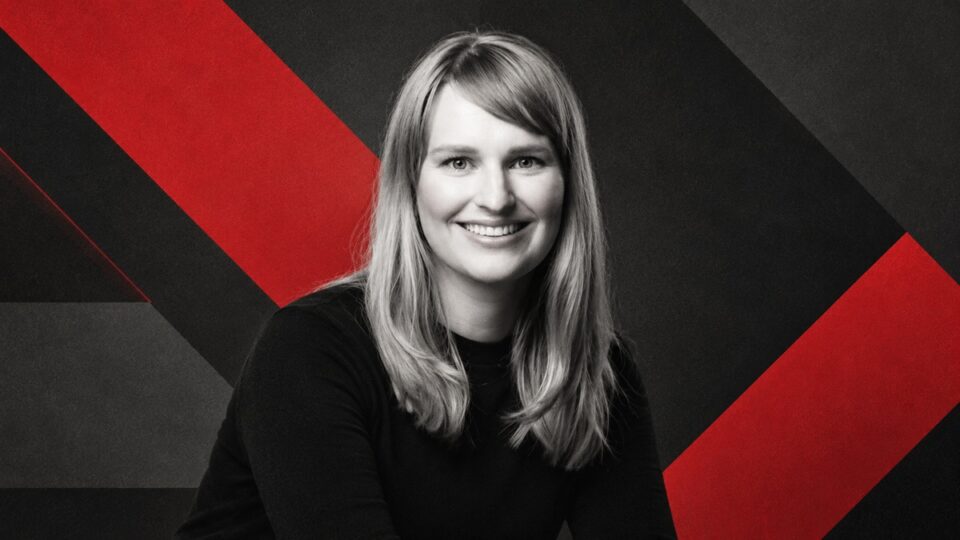
After 19 years of navigating the gambling industry, Slader was ready for a career shift. This August, she departed Vancouver-based GeoComply—concluding a 14-year tenure—to become the Chief Growth Officer at UBank, marking the next chapter of her career within the sector. UBank’s corporate vision centers on streamlining financing processes for companies entering the gambling industry.
“I truly love gaming,” Slader says. “I’ve been in this industry for nearly two decades, so I didn’t want to leave it. At the same time, I didn’t want to box myself into one overly specific niche, which would have limited my ability to spot entrepreneurial opportunities and areas with the highest growth potential across the gaming landscape.”
“That’s why I really appreciate the perspective offered by the banking and financial sectors—it allows me to broaden my horizons.”
Gambling Good sat down with Slader to discuss her career transition and her outlook on the U.S. gambling industry after nearly twenty years in the field.
GI: Why did you feel that now was the right time to make this move?
LS: I have a background in banking; I previously served on the board of MVB, which sits at a fascinating intersection of banking, gaming, payments, and fintech. I was drawn to the opportunity to help an established, mature company develop a growth strategy.
It feels like a fantastic entrepreneurial experience—building something new within an already established institution. My plan is to identify growth opportunities for the bank and craft a long-term strategy to help it evolve into a fintech-oriented organization.
GI: How did you come to connect with UBank?
LS: I think the timing was perfect for both of us. I spent 14 years at GeoComply and enjoyed every aspect of my time there. While the company focuses primarily on geolocation and technology, my role spanned many facets of the gaming industry, with a strong emphasis on strategic partnerships.
So, for me, this is an excellent career move—one that allows me to continue leveraging the network and relationships I’ve built in gaming over the last two decades, while integrating a greater focus on fintech. Moreover, the gaming industry is converging with various other sectors—as well as the broader fintech and regtech landscapes—making it an ideal space for me to really make an impact.
GI: How interesting is it to remain involved in the gambling sector, albeit in such a completely different capacity?
LS: The gaming industry itself is constantly looking to reinvent itself through various fintech avenues. When we talk about cryptocurrency, for instance, we see many different types of B2C gaming companies exploring how to integrate crypto into their operations.
Furthermore, cryptocurrency could well emerge as an increasingly significant payment method. What does this mean for the regulated gaming industry in the U.S.? I believe the way traditional banking payment methods are converging with the various forms of gaming we see today is a truly fascinating area to explore.
There is still a lot I don’t know, so I’m very much learning as I go.
GI: Why are you the right person for UBank at this moment?
LS: UBank has been involved in the gaming sector for about five years. Now, however, they want to deepen their professional commitment to the industry—and, naturally, expand their network within it. Bringing me on board to help craft a comprehensive growth strategy and gain a deeper understanding of this space is the first step in that process.
GI: Why is UBank looking to expand into the gaming sector?
LS: I see it as a highly compelling growth opportunity for them. It’s currently a very dynamic area within the financial landscape. Naturally, it carries a higher risk appetite than standard, day-to-day banking, which is why you need to be a specialized bank to focus on it. There’s a vast array of potential partners—the gaming ecosystem is home to a wide variety of players.
Whether you’re an operator, a supplier, or a payment service provider—not to mention the many ancillary businesses, consultants, and other industry professionals we frequently engage with—everyone is looking to scale their operations rapidly and seize new opportunities. Ultimately, they need a financial partner to help them achieve those goals.
That’s why the gaming sector is viewed as a major growth opportunity for UBank—a space they’ve previously explored through partnerships with various third-party payment providers.
GI: What features do current and future gamblers look for in a product?
LS: I think people want it all. They don’t want to be forced to choose just one thing. I’ve heard of people who enjoy playing online slots in states where it’s legal, yet they still choose to play social casino games—whether for different reasons, at different times, or simply depending on their mood.
Just as we don’t limit ourselves to eating only one type of food, having a variety of options is a great thing. I believe this is simply human nature; prohibiting something doesn’t necessarily stop us from enjoying it. Consequently, people will always seek a wide range of choices, regardless of how legislation or government policy might attempt to restrict, regulate, or control these activities.
The human desire for variety—for change—is unlikely to ever go away.
GI: What is the biggest obstacle to making this process easier for them in the future?
LS: There are currently many legal hurdles, but people are resourceful—they will always find a way to access the products they want. For our industry, it is therefore crucial to have robust safeguards in place. We must ensure that people can access these products responsibly, while also protecting the average consumer from risks like fraud, ensuring that deposits can be made safely, and verifying the identities of our customers. The compliance measures our industry takes such pride in are not only essential—they are also a key driver of our sector’s growth.
When we consider introducing new payment methods—such as the cryptocurrencies I mentioned earlier, or other innovations that could bring new users into the ecosystem—it’s clear that our industry should explore and leverage these opportunities. However, it will take a significant amount of work to successfully integrate these “square pegs” into our existing “round holes”—ensuring that everything functions effectively in terms of legal compliance, consumer safety, and the overall ease of use and appeal of the products themselves. We are a creative industry; as long as we act responsibly, I am confident we can find solutions.
GI: How will gambling ultimately fit into the daily entertainment or hobbies of the average American?
LS: I don’t know the answer to that. My mind immediately goes to the UK, where brick-and-mortar betting shops have long been a common, non-taboo part of life, and online gambling has existed for at least two decades. Yet, even there, the realities of the industry—and the persistent challenges it faces—continue to create significant hurdles. Varying regulatory measures have led to stark differences in how users engage with gaming—both in terms of how they play and how much time they spend doing so. In my view, even as gaming becomes increasingly ubiquitous in the United States—with a growing diversity of products, an expanding industry, and greater mainstream acceptance—the challenges we face remain. Navigating the complexities that arise from these challenges is, I believe, unavoidable; we must simply be prepared to meet them.
Consequently, I don’t necessarily see the path ahead becoming any easier. To achieve responsible growth, we need to be smarter and more proactive in how we respond to change.
GI: Where is the energy and momentum for change in the gaming industry coming from right now, and in the near term?
LS: Like everyone else, I’ve been keeping a close eye on everything. There are a lot of legal questions surrounding the various developments in the gaming sector. What I truly love is witnessing the full cycle of this industry—from the days before the U.S. gaming sector was regulated, through the Daily Fantasy Sports (DFS) boom, to the current wave of new ventures. That’s what really excites me.
Some products or services will have staying power, while others may evolve into something entirely different. I’ll be watching from the sidelines; there are so many ambitious people in our industry coming up with brilliant new ideas and business plans. I look forward to meeting many of them, learning about their visions, seeing what they intend to build, and discovering whether those plans can actually come to fruition—or stand the test of time. I think that’s going to be fascinating.
Many people in this industry tend to jump from one opportunity to the next, which, to me, suggests that everyone is interconnected—regardless of the specific type of gaming they happen to be involved in at any given moment.
GI: Given that legal rulings—such as those concerning prediction markets or sports-related contracts—could change everything, how do you approach your professional relationships?
LS: The gaming industry is subject to existing gaming regulations, as well as the various legal developments we see playing out in the courts—whether they concern prediction markets or other forms of wagering. From a banking perspective, we also have our own state and federal regulators who oversee our operations.
Compliance remains absolutely critical, and for UBank, it serves as a significant competitive advantage. Understand the industry, establish appropriate controls, anticipate future growth, and build a solid foundation for understanding and managing risk. Consequently, I believe there is a limit to how much we can foresee regarding upcoming court rulings or the pace at which the Supreme Court might address such issues.
What we can anticipate is that many minds may change and much will evolve; therefore, the most prudent path forward is to implement control mechanisms and select excellent partners along the way.
GI: What is the appetite among fintech companies for entering the gaming industry?
LS: I am still in the process of mapping out all the opportunities—a key part of my role. What I’ve gathered is that stakeholders across the gaming sector are currently seeking banking partners who are stable, reliable, professional, and responsive to their growth plans. Looking back at the early days of regulated gaming in New Jersey 13 years ago, it took banks a long time to adjust their risk appetite, grasp the true nature of this industry, and begin viewing it as an opportunity rather than a daunting challenge.
We have certainly come a long way since then, though that doesn’t mean securing banking services is easy for every company within the gaming ecosystem. From UBank’s perspective, the goal is to support gaming enterprises that have sound plans or robust operations and that conduct business in a safe, reliable manner. By leveraging our deep industry knowledge and expertise, we aim to help these companies navigate change and achieve growth.
GI: How do you view the manner and pace at which legal sports betting has spread across the United States since 2018?
LS: I think the gaming industry lacks patience—we are constantly looking to reinvent ourselves. In fact, rather than a “tipping point,” it often feels more like a plateau; if no new states legalize sports betting—or any other form of gaming or product—we quickly become restless, don’t we?
Then, people start experimenting with all sorts of cool, new things. Reactions to this vary: some embrace it, engage actively, and seize the opportunity, while others might say, “Well, this is different—we don’t like it.” It also faces numerous challenges, which makes the narrative all the more compelling. If there’s one thing I’m certain of, it’s that change is inevitable—so I expect it to keep reinventing itself.
The trends we’re seeing in our current forecasts are, in part, a byproduct of a slight stagnation within the sports betting sector. To drive growth, we need new catalysts—and likely a fair bit of alignment across various other areas. We’re seeing a similar sluggishness in the iGaming space; growth has been slow. Consequently, many creative minds are leveraging the very gaps or limitations they encounter to develop entirely new products.
GI: Is it frustrating to navigate the promotion of gambling across 52 different U.S. jurisdictions, each with its own distinct approach?
LS: It can be. It’s an incredibly exciting space to watch and be a part of—but for a variety of reasons, we can’t simply wave a magic wand and replicate the New Jersey model everywhere else.
That said, what makes the U.S. gaming industry—and the country itself—so fascinating is that every state has its own unique gambling ecosystem. Whether it’s tribal gaming, lotteries, or horse racing, there are so many different dynamics at play. Even as the industry evolves and introduces new products, the outcomes will likely vary from state to state.
GI: What does a typical day look like for you right now?
LS: I feel like I’m attending “Banking University.” I’m diving deep into the banking and payments ecosystem. At the same time, it’s been great to reconnect with people I’ve known over the last two decades—learning about their new ventures and the challenges they’re facing.
I’m constantly asking myself: Is this something I can help with, or can I anticipate where they’re headed next? It’s all very engaging. Looking ahead, I’m focused on developing growth strategies and identifying closer partnerships for UBank.
I’m genuinely excited about what the coming months and years have in store. Around the time the Professional and Amateur Sports Protection Act (PASPA) was struck down—a development that opened the door for legal sports betting nationwide—Lindsay Slader emerged as a knowledgeable and reassuring presence, frequently seen speaking into microphones at state and federal committee hearings.
Over the course of four successive roles, eventually becoming the Senior Vice President of Compliance at the geolocation firm GeoComply, she assured countless politicians and regulators that existing technology was more than capable of keeping bettors and the public safe within what was poised to become a booming, complex new industry in the United States. Just eight years later, 41 U.S. jurisdictions have legalized some form of sports betting, while the rise of prediction markets and sweepstakes-based casinos has further transformed the day-to-day work of tech experts and advocates within the gaming industry.