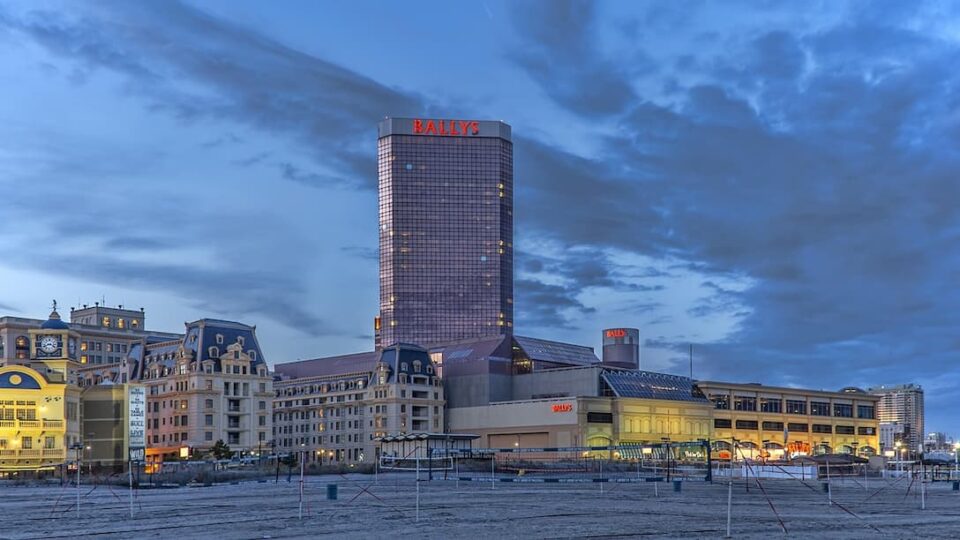
Bally’s Corporation has delayed the filing of its 10-Q quarterly report for the third consecutive quarter, following the release of preliminary earnings results last week. A subsequent filing with the U.S. Securities and Exchange Commission (SEC) revealed that the company failed to meet minimum liquidity requirements at the end of September.
While lenders have waived the right to declare a default, the company has warned that another default is likely by the end of the year and continues to express substantial doubt regarding its ability to remain a going concern.
The situation improved the following day, as Bally’s announced it had secured $560 million in additional financing commitments. The company stated that these agreements would bolster its liquidity position and help fund its casino development project in Chicago.
Bally’s is currently under significant financial pressure as it pursues major casino developments in Chicago, New York, and Las Vegas, alongside plans for international expansion.
Despite revenue growth, Bally’s losses are deepening.
Driven by its Intralot operations and growth in the North American market, Bally’s saw its third-quarter revenue rise by 21.7% to $807.6 million. However, this revenue growth did not translate into a reduction in losses.
Financial statements show that Bally’s recorded a consolidated net loss of $117 million for the quarter, compared to a net loss of $106.2 million in the same period last year. Net interest expense remains a major cost, increasing to $126.3 million from $105.9 million in the third quarter of the previous year.
As of the end of September, Bally’s held $497.3 million in cash and cash equivalents—an increase from the $390.2 million reported at the end of June—but still well below the $798.4 million held at the start of the year.
Cash flow remains under pressure; the company’s expenditures for operating activities in the third quarter exceeded its revenue by $133.7 million, bringing total cash outflows for the first nine months of the year to $399.6 million.
Bally’s anticipates further liquidity shortfalls by year-end.
Having already warned of potential liquidity and debt issues in its second-quarter earnings report, Bally’s financial position remains under close scrutiny. The company’s third-quarter financial report indicates that these concerns persist. Bally’s disclosed that, as of September 30, it failed to meet the minimum liquidity requirements under its revolving credit facility, though lenders granted a conditional waiver on October 1.
Nevertheless, the company has warned that another liquidity shortfall could arise before the end of the year.
Based on current projections—and absent any further waivers or amendments—management believes it is highly likely that the company will be unable to satisfy the minimum liquidity covenant stipulated in the May 2026 waiver agreement by December 31, 2026.
Should Bally’s breach this covenant again—without securing a waiver or successfully exercising its right to cure the default—lenders could demand repayment of the outstanding balance on the revolving credit facility. Notably, however, Bally’s reported that it is not in default under any of its other major debt agreements.
As part of the October 1 agreement, lenders also authorized Bally’s to raise up to $500 million in additional capital. Furthermore, they consented to the transfer of the company’s New York State gaming license to Bally’s, a move intended to facilitate financing for the proposed Bronx casino project.
Despite exploring options for additional financing and potential asset sales, Bally’s has maintained its warning regarding the risk to its status as a “going concern”:
Consequently, the company has concluded that management’s plans do not sufficiently alleviate substantial doubt regarding the company’s ability to continue as a going concern.
This warning was issued just one day before Bally’s announced $560 million in additional financing commitments, aimed at strengthening its financial position and supporting the development of its Chicago casino.
According to an announcement released on November 17, these commitments include $500 million in net proceeds from a new second-lien term loan, which will be used to repay a portion of existing debt and for general corporate purposes. Additionally, Gaming and Leisure Properties, Inc. (GLPI) has committed to investing $60 million in the Chicago project, bringing GLPI’s total investment in the development to $1 billion. Bally’s stated that these commitments have improved its liquidity position and expressed confidence in its ability to meet cash flow requirements over the coming year. However, the financing arrangements remain subject to final documentation and regulatory approvals—including approval for additional investment from GLPI.
Despite facing financial pressures, CEO Robeson Reeves reaffirmed the company’s casino expansion plans. He highlighted the progress made in operations and the continued investment in major development projects.
During the earnings call, Reeves remarked:
“Our development projects remain on track, execution is improving across the board, and market conditions have remained stable as we head into the fourth quarter and toward 2027.”
Although construction on the non-casino components was slowed earlier this year, the company expects its permanent casino in Chicago to open in the spring of 2027. Reeves noted that the Bally’s Chicago property is on track to meet—or potentially exceed—the $1.34 billion minimum investment threshold stipulated in its agreement with the City of Chicago.
On October 1, Bally’s also finalized a $400 million financing agreement led by WhiteHawk Capital Partners, with an additional $160 million available for future drawdown to support its planned $4 billion casino development in the Bronx.
Reeves stated that this financing would fully cover initial construction costs. He further revealed that Bally’s is in advanced negotiations with potential partners to support the retail component of its Las Vegas property, located adjacent to the new stadium for the Oakland Athletics.
Beyond its major U.S. projects, the company is moving forward with the acquisition of Evoke (via its subsidiary, Intralot), with the transaction expected to close in the first quarter of 2027. Meanwhile, in Australia, Reeves noted that The Star Entertainment Group returned to positive EBITDA in September. The Star anticipates that fiscal year 2027 will mark its first period of positive operating cash flow—excluding one-off items—in over two years. New financing commitments may help alleviate some of the pressures noted in Bally’s third-quarter earnings report, though the agreements have yet to be finalized. The company currently faces the challenge of balancing its debt obligations and the funding of casino development projects with the need to translate revenue growth into stronger cash flow.
Although Bally’s Corporation reported a 21.7% increase in third-quarter revenue, it disclosed that its liquidity had fallen below the minimum required levels as of the end of September. The following day, the company announced that it had secured $560 million in new financing commitments to address mounting financial strains.