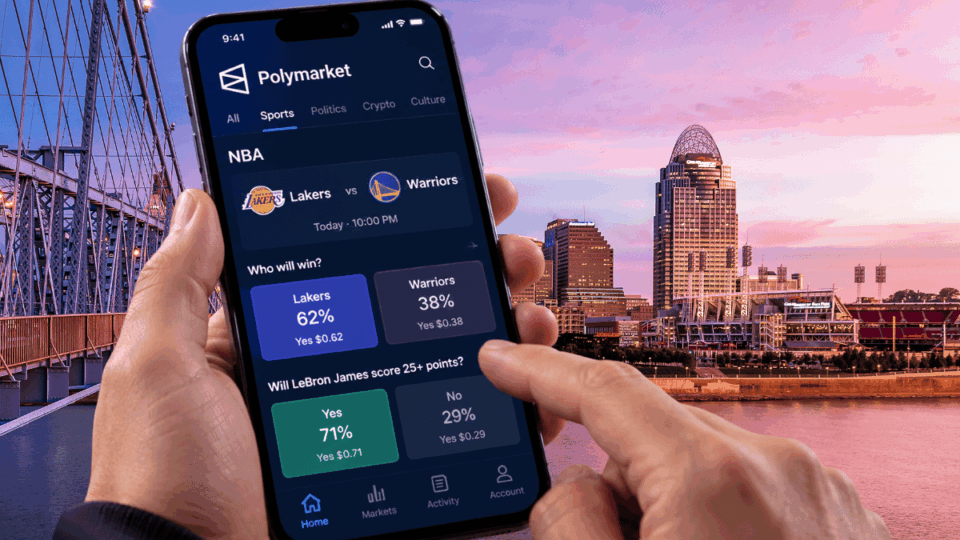
Polymarket has introduced new constitutional arguments, the CFTC is seeking public input, and Kalshi is in no rush to escalate its case to the Supreme Court. Meanwhile, in Washington, a defense is being mounted against a lawsuit filed by Novig, and Canada has clarified its stance on contracts tied to sporting events.
The legal battle surrounding prediction markets shows no signs of cooling down. Polymarket is taking aim at Ohio’s sports betting laws; the Commodity Futures Trading Commission (CFTC) is soliciting public comment on the future of event-based contracts; and state regulators continue to defend their respective jurisdictions.
Additionally, Kalshi is seeking more time for its Supreme Court proceedings, the Lumbee Tribe has taken a significant step forward regarding gaming, and Fanatics has assured its customers that they will not be charged extra for fairness.
Big News: Polymarket Challenges Ohio Sports Betting Law on Constitutional Grounds
Polymarket has found a new avenue to challenge state-level gaming regulation—this time by invoking the U.S. Constitution. In a new lawsuit filed against Ohio regulators, the prediction market operator argues that the state’s online sports betting framework violates the Constitution’s Commerce Clause by requiring licensed entities to maintain a physical presence and operate servers within the state.
Polymarket characterizes these requirements as “illegal protectionism,” contending that by effectively mandating that national businesses establish local branches, Ohio is discriminating against interstate commerce.
This dispute adds a new dimension to the growing number of legal battles in the sector. While much of the litigation involving Kalshi and Polymarket has centered on whether federal commodities law preempts state gaming regulation, this challenge questions the constitutionality of the state’s licensing framework itself.
In other words, Polymarket is questioning whether Ohio’s current market-access rules should even exist.
The Daily Telegraph
The Commodity Futures Trading Commission (CFTC) has opened a public comment period, as the prediction market industry eagerly awaits the release of a formal rulebook. The U.S. Commodity Futures Trading Commission (CFTC) has once again provided the industry an opportunity to weigh in on the future of event-based contracts. The agency has opened two public comment periods—running until November 18—concerning casino-style gambling products and event-based contracts.
This development comes amid ongoing friction between regulators, exchanges, and sports betting companies regarding the boundary between financial trading and gambling. The stakes are high for prediction market operators; the final regulatory stance could dictate which contracts exchanges are permitted to list and how the federal government distinguishes between financial products and gambling.
Having already received a substantial volume of legal input, the CFTC is now formally requesting further commentary.
Washington State Seeks Dismissal of Kalshi Lawsuit
Washington State has filed a motion to dismiss a lawsuit brought by Kalshi concerning sports prediction markets, adding a new chapter to the ongoing jurisdictional dispute between individual states and federally regulated exchanges.
As Washington defends its regulatory position, prediction market operators continue to challenge state-imposed restrictions through federal litigation.
Canada Clarifies Stance on Sports-Based Contracts
While U.S. courts remain embroiled in debates over which authorities have the right to regulate sports prediction markets, Canada has taken a more definitive approach. The Canadian Investment Regulatory Organization has updated its rules to explicitly prohibit contracts based on the outcomes of sporting events.
This clarification reinforces the distinction drawn by Canadian regulators between legitimate investment products and contracts tied to the results of sports events—leaving little room for interpretation in an industry otherwise accustomed to operating within regulatory gray areas.
Kalshi Requests More Time from the Supreme Court
Kalshi appears to be in no rush to reach the next stage of proceedings before the Supreme Court. The prediction market operator has requested a one-month extension for the legal process, as its dispute with state-level gambling regulators continues to unfold. Kalshi has filed petitions for rehearing with both the Sixth and Ninth Circuit Courts of Appeals, requesting a review of their recent rulings in light of upcoming regulations from the U.S. Commodity Futures Trading Commission (CFTC). The Ninth Circuit has already denied the request, concluding that the forthcoming regulations “would not change the outcome of this case.”
Lumbee Tribal Council Approves Historic Gaming Ordinance
The Lumbee Tribal Council has passed a gaming ordinance by a vote of 14 to 2. Following certification, the ordinance will be put to a referendum of the Lumbee Tribe’s voters in 45 days, with the specific date to be set by the Tribal Election Board. Tribal officials anticipate the vote will take place between December 10 and 15, 2026.
The decision on October 19 comes as the possibility of future casino development remains under consideration. The ordinance does not guarantee that a casino will be built; however, the broader question of what happens next remains unresolved.
Polymarket and Athlete Endorser Face Backlash Over “Cornell 7” Market
Polymarket is facing fresh scrutiny, this time regarding the types of events available for wagering on its platform. According to Front Office Sports, the operator—along with an athlete who endorsed it—has come under fire for a market centered on the “Cornell 7.” FOS reporter Ben Horney noted that the market has since been removed.
The market went live on September 30, though it was not available on Polymarket’s U.S. application. By early Monday afternoon, it had generated $451,633 in trading volume. At that time, traders estimated a roughly 28% probability that at least one member of the “Cornell 7” would be charged with a felony sex offense by the market’s scheduled closing date of January 31, 2027.
Prioritizing Integrity: Novig Expands Partnership with IC360
Novig and IC360 have expanded their partnership, aiming to strengthen trust, security, and integrity safeguards within the sports prediction market. This agreement comes at a time when the industry is facing increasingly stringent market regulation, concerns over suspicious betting activity, and a growing need for safeguards to protect the integrity of sporting events. Kalshi announced its partnership with this integrity monitoring organization back in March of this year.
Kalshi previously stated: “Alerts from IC360 are triggered in tandem with Kalshi’s own internal alerts—as they are across other platforms offering sports betting markets—enabling Kalshi to stay informed about suspicious activity occurring on other trading platforms and venues.”
Fanatics pledges free “player protection,” taking aim at competitors
Fanatics Sports places a high premium on fairness and is keen to ensure its customers are aware of it. In an announcement on October 19, the company pledged to provide “player protection” for the duration of any given game—at no extra cost—throughout the season.
This move has fueled an intensifying debate regarding how operators handle player injuries and the protection of consumer interests when a player leaves a game early. Fanatics’ stance is that consumers should not have to pay for fairness. Whether its competitors share this same definition of fairness, however, remains another matter entirely.