Allwyn has reached an agreement with Kambi to bring sports betting technology in-house.
In other supplier-related news, Allwyn has signed a €50 million deal with Kambi to integrate the latter’s sports betting technology into its own operations—a move described as “strategically significant” during Allwyn’s 2025 fiscal year earnings call.
Unlike traditional sports betting partnership models, Allwyn will receive a perpetual license for Kambi’s source code, granting it the ability to modify the technology, introduce new features, and tailor products for different markets. Kambi will build the initial platform before handing it over to Allwyn.
This partnership with Kambi follows Allwyn’s failed attempt to acquire Novibet earlier this year—an acquisition that was intended, in part, to secure sports betting technology.
Allwyn projects that its sports betting revenue will exceed €800 million by 2025. The company anticipates that a unified platform will, over time, reduce costs and support the expansion of its various brands.
On Tuesday, prediction markets faced fresh regulatory and legal setbacks, with reports suggesting that the U.S. Commodity Futures Trading Commission (CFTC) may initiate legal action against Kalshi. Additionally, a federal judge in New York denied a request for an injunction filed by Novig against state officials.
Meanwhile, Representative Ro Khanna has called on Congress to ban sports prediction markets, further intensifying the political scrutiny facing the sector.
In other developments, DraftKings has acknowledged sending personalized videos of NBA players to its customers; lawmakers in Texas have introduced new legislation aimed at legalizing casino gaming and sports betting; and police in Pennsylvania have reported a 99% compliance rate regarding the removal of “skill games.”
Major News: Kalshi Faces Potential Charges from the CFTC Over Contract Filings
According to reports from Politico and Reuters, the U.S. Commodity Futures Trading Commission (CFTC) has privately warned Kalshi that it could face imminent enforcement action for failing to properly notify the agency regarding new contracts. A person familiar with the matter told Politico that the investigation has been ongoing for months, focusing primarily on whether Kalshi complied with federal product-notification requirements for dozens of its contracts. While no formal charges have been announced, this warning suggests that charges could be imminent—though a settlement remains a possibility.
Under the Commodity Futures Trading Commission’s (CFTC) “self-certification” process, regulated exchanges can list new products without prior approval, provided they certify that the contracts comply with applicable laws and regulations.
Kalshi spokesperson Elizabeth Diana told Politico that the warning concerns “procedural errors in the submission of a small number of contracts, many of which never went live.” She added that the company is “already addressing the issue.”
For the CFTC, this potential enforcement action comes at a particularly sensitive time; the agency has generally supported prediction markets and defended its jurisdiction over them against attempts by state regulators to enforce their own anti-gambling laws.
In June, Politico also reported that the CFTC was investigating Polymarket, though the scope of that inquiry remains unclear.
The Daily Telegraph
New York Judge Denies Kalshi’s Injunction Request, Ruling Sports-Based Contracts Are Not “Swaps”
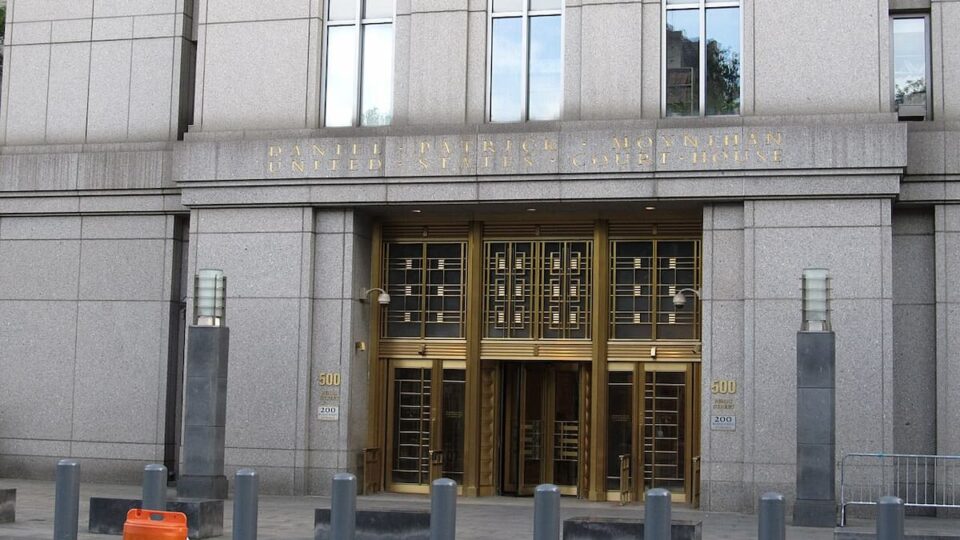
Legal challenges within the prediction market industry continue in New York, where U.S. District Judge Colleen McMahon has denied a request for a preliminary injunction that would have blocked state-level enforcement of anti-gambling laws.
On November 10, Judge McMahon ruled that Kalshi’s contracts based on sporting events do not qualify as “swaps” under the Commodity Exchange Act. She also rejected the company’s argument that federal law preempts New York State’s gambling regulations.
The judge questioned the CFTC’s shifting stance regarding sports-based contracts, noting that a rule issued by the agency in October failed to explain the distinction between these contracts and traditional sports betting wagers. McMahon also criticized an emergency order from the U.S. Commodity Futures Trading Commission (CFTC) that required Kalshi to continue its operations in New York, regardless of any contrary rulings by state courts. She wrote that this “suggests a degree of collusion between the regulator and the regulated, aimed at manufacturing a claim of federal preemption.”
She was equally dismissive of Novig’s argument that its peer-to-peer model distinguishes it from traditional sportsbooks.
Rather than profiting from “suckers” who lose money on sporting events, Novig’s business model involves charging fees to two opposing parties—both of whom are essentially “suckers”—to bet against each other on its platform. “Again,” McMahon wrote, “this is entirely beside the point.”
The judge also rejected Novig’s argument that state licensing requirements would conflict with federal mandates, labeling it “absurd.” She pointed out that the company could—as it previously did in Colorado—obtain a gambling license and implement geofencing technology.
“The court is not required to ignore common sense—Novig’s contracts on sporting events are sports betting,” she concluded.
Rep. Ro Khanna Calls for Ban on Sports-Based Prediction Markets
Federal lawmakers are also intensifying pressure on prediction market platforms. Democratic Representative Ro Khanna has called on Congress to ban contracts based on sporting events.
In a post on X, Khanna described these markets as “sports betting masquerading as financial trading.” He added that such markets “flout state and tribal gambling laws, siphon off state tax revenue, fuel gambling addiction, and expose young Americans to public health risks—all while circumventing state-level consumer protections.”
His remarks signal heightened congressional scrutiny of prediction markets—a trend likely to intensify as Democrats prepare to take control of both chambers of Congress next January. Many observers anticipate that, unlike the current administration, a Democratic-led Congress will subject this rapidly growing industry to rigorous oversight. DraftKings Reveals Sending Personalized NBA Player Videos to Customers
Consumer protection concerns have drawn attention to traditional sports betting operators, with DraftKings acknowledging that it once sent a personalized video featuring New York Knicks guard Miles McBride to a customer.
In a November 5 letter to lawmakers, DraftKings stated that its loyalty team had sent a “Cameo-style” video featuring McBride, though it noted that it does not typically use celebrity messages to incentivize customers.
This disclosure came in response to inquiries from Senator Richard Blumenthal and Representatives Paul Tonko and Valerie Foushee, who are conducting an ongoing investigation into how FanDuel treats its VIP bettors.
Previous reports indicated that FanDuel sent a custom video featuring Bryce Harper to a VIP customer who had allegedly lost $1.5 million through gambling. FanDuel subsequently admitted to sending approximately 30 such celebrity videos over a period of more than two years.
In its letter, DraftKings denied targeting problem gamblers with promotional content, but confirmed that its VIP customer service team can tailor promotions based on a client’s betting activity. The company stated that 10% to 20% of its sports betting promotions are directed at specific customer segments or individuals. Furthermore, citing competitive sensitivity, the company declined to disclose data regarding the average wins or losses of its customers.
Texas Lawmakers Renew Push to Legalize Casinos and Sports Betting
While lawmakers in Washington, D.C., scrutinize gambling operators and prediction markets, legislators in Texas are making another attempt to expand legal gambling.
Republican State Representative Charlie Geren has pre-filed House Joint Resolution 52, while Democratic State Senator Carol Alvarado has introduced a companion measure, Senate Joint Resolution 11. These bills would allow voters to decide—via a constitutional amendment—whether to legalize casino gaming and sports betting. These measures would allow for the issuance of up to 10 casino licenses and set a tax rate capped at 15%, with other regulatory details left to be determined by lawmakers. The proposals require approval by a two-thirds majority in both chambers of the legislature before they can be placed on the ballot for a public vote in November 2027.
Additionally, Democratic Senator Roland Gutierrez has introduced Senate Joint Resolution 12. While the full text has not yet been released, the resolution’s title indicates a proposed constitutional amendment that would authorize the Kickapoo Tribe to conduct gambling operations through an agreement.
The emergence of these measures—coinciding with a shift in key Texas political positions from Republican to Democratic control—has reignited hopes among gambling industry proponents for expansion. Previous attempts to legalize gambling have consistently failed, primarily due to opposition from the Republican leadership in the Senate, most notably Lieutenant Governor Dan Patrick.
Patrick was defeated by Vikki Goodwin, who has expressed support for letting voters decide on the issue. However, as Republicans still maintain control of the Senate, there is a possibility that they could strip Goodwin of her authority.
In Pennsylvania, authorities report a 99.4% compliance rate regarding the removal of “skill games.”
Following a ruling by the Pennsylvania Supreme Court that declared skill-based gaming machines illegal, the state’s effort to remove them has proceeded successfully, according to officials.
Pennsylvania state police reported that since October 14, law enforcement officers have inspected 12,202 establishments, finding that 12,134 of them have ceased offering skill games—a compliance rate of 99.4%. During these enforcement operations, police seized only 14 gaming machines and $1,913 in cash.
Nevertheless, police noted that some operators and manufacturers are attempting to circumvent the ban by introducing “sweepstakes” devices that do not accept cash directly, under the mistaken belief that this renders them legal. Officials have warned that machines utilizing alternative payment methods may still be in violation of state law. Playtech Raises 2026 EBITDA Forecast to Over €300 Million
The supplier has increased its full-year adjusted EBITDA guidance following stronger-than-expected performance in the Americas.
The gambling technology provider now expects its adjusted EBITDA for 2026 to exceed €300 million ($334 million)—a figure higher than both its previous guidance and the market consensus of approximately €279 million.
The company attributed its growth in the U.S. primarily to its partnership with Hard Rock Digital and its distinctive “virtual motor racing” product. However, Playtech cautioned that intensifying competition from other providers of similar virtual racing games could potentially impact its market share by 2027.
Playtech noted that its operations in Mexico and Colombia benefited from positive momentum following the men’s FIFA World Cup.
The company also highlighted potential headwinds for the coming year, including gambling restrictions in Brazil and an increase in remote gambling taxes in the United Kingdom.
Despite these pressures, Playtech has maintained its medium-term financial targets.