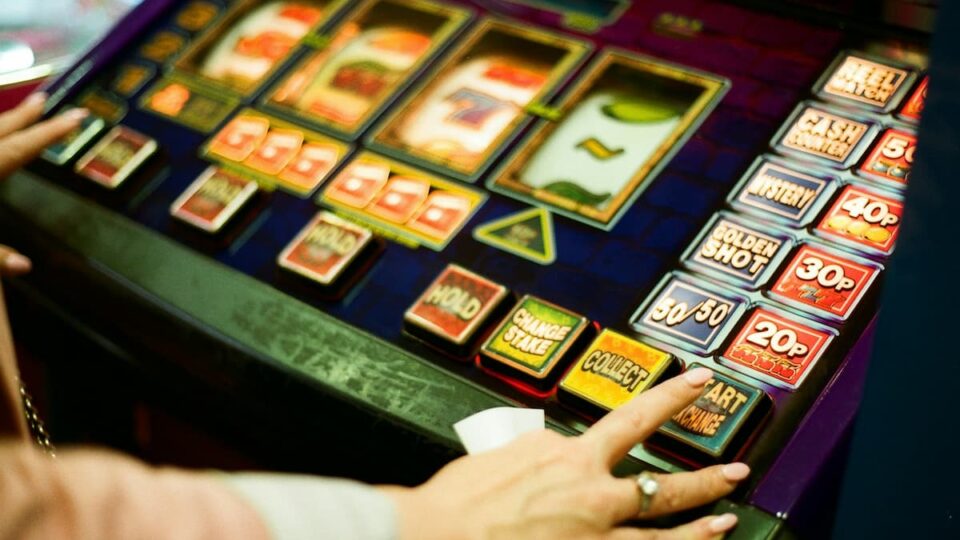
In a response to Gambling Good, Bruce confirmed that the police have discovered a number of establishments equipped with a new type of gambling device. He noted that manufacturers and operators claim these machines are legal because they do not accept cash, operating instead as “sweepstakes” games.
Unlike traditional cash-based gaming machines, these devices require players to register using a driver’s license and link a payment method—such as a debit card, Cash App, or a bank account—before they can access slot-style games.
The Pennsylvania State Police (PSP) consider these machines illegal because they require electronic payments, offer slot-style gameplay, and provide opportunities to win prizes without authorization from the Pennsylvania Gaming Control Board (PGCB).
The agency also warned that devices using QR codes or mobile apps to provide simulated slot games, casino-style games, or sweepstakes-based gambling pose similar risks. Machines that offer “free credits”—which can then be supplemented by a player’s own funds to continue playing—may also be classified as illegal.
The PSP stated that no manufacturer or operator consulted the agency regarding the legality of these devices before deploying them. The agency warned that those who continue to operate these terminals could face criminal charges for illegal gambling or related offenses.
Bruce confirmed that the PSP is working with the PGCB and the Pennsylvania Office of Attorney General to notify establishments using these devices that they must be removed, or else face confiscation.
“The PSP has already begun seizing these sweepstakes-style machines,” Bruce said.
The agency is coordinating with district attorneys across various counties as it addresses these devices. However, the Pennsylvania State Police have not specified the number of machines seized, nor have they identified the manufacturers.
A protracted legal battle continues in North Carolina.
Unregulated sweepstakes machines are nothing new.
For nearly two decades, North Carolina has been locked in a struggle with operators of sweepstakes terminals, as manufacturers repeatedly modify their products and challenge restrictions in court.
In 2007, North Carolina banned video poker machines. In 2010, North Carolina enacted a ban on sweepstakes machines after manufacturers attempted to circumvent existing prohibitions by introducing such devices. This ban triggered years of litigation. In 2012, the North Carolina Supreme Court rejected a constitutional challenge brought by the manufacturer Sandhill Amusements, upholding the validity of the ban.
A decade later, in February 2022, the court dismissed a lawsuit filed by Sandhill and Gift Surplus concerning modified sweepstakes devices. In that case, the court determined that even though the devices had been altered to incorporate an element of skill, luck remained the dominant factor.
The legal battle continues to this day. This September, the North Carolina Supreme Court heard another case involving a company called No Limit Games, whose video sweepstakes kiosks were ruled illegal by an appellate court in December 2024.
The core of the current dispute remains whether these machines rely primarily on skill or on luck.
Illinois Lawmakers Seek to Define Sweepstakes Machines
While North Carolina has spent years defending its restrictions on sweepstakes operations in court, Illinois is still debating how to address such machines.
Over the past few years—including this year—lawmakers have repeatedly introduced bills aimed at regulating or banning these devices, though none have passed. Meanwhile, some local municipalities have also begun discussing whether to prohibit or regulate them within their own jurisdictions.
This February, State Representative Bob Rita introduced House Bill 5030 (HB 5030), which would expand the definition of illegal gambling equipment to include certain electronic machines that offer sweepstakes entries or prizes linked to purchases, coupons, or points.
Another proposal, House Bill 5048 (HB 5048)—introduced by Representative Lisa Davis—seeks to establish a regulatory framework for legitimate prize and gift kiosks, while requiring businesses to register these machines with the state. Neither of these bills cleared the House Rules Committee.
At the municipal level, the Chicago City Council voted 33–15 in June to reject a proposal that would have banned lottery-style gaming machines, leaving an estimated 7,000 such machines still in operation across the city. During budget hearings in November, city officials acknowledged that they were unable to estimate the exact number of these machines currently in operation.
Meanwhile, in Evanston, officials considered competing proposals—ranging from an outright ban to stricter regulation—following complaints about electronic sweepstakes machines in local businesses.
Texas and Florida highlight further loopholes involving gaming machines.
As Illinois lawmakers debate how to regulate sweepstakes machines, examples from Texas and Florida illustrate how operators exploit alternative prize structures and promotional claims to circumvent gambling laws.
On November 4, deputies from the Bexar County Sheriff’s Office raided seven suspected illegal gambling establishments in the San Antonio area, detaining 23 individuals and seizing more than 500 gaming machines.
According to authorities, some of these establishments—all operating under the same company—offered Pokémon or sports trading cards instead of cash prizes. Investigators noted that players could then sell these cards to nearby businesses, effectively converting their winnings into cash.
This seizure is the latest in a series of enforcement actions against local gambling venues, including one known as “Blessed Sweepstakes.”
Texas law provides limited exemptions for certain amusement devices that award non-cash prizes. However, authorities have challenged arrangements where such non-cash prizes serve merely as a substitute for cash payouts.
Florida is another state that has struggled for years with unregulated gaming machines, as manufacturers and operators frequently introduce new equipment or relocate their operations. Gambling regulators have pointed to insufficient penalties and vague statutory language, urging lawmakers to address the issue. At the same time, they are focusing on education and raising public awareness. The Florida Gaming Control Commission has noted that claiming an operation is a “sweepstakes” is a common pretext used to circumvent gambling laws.
Meanwhile, the Florida Department of Agriculture and Consumer Services has warned that conducting promotional games or sweepstakes does not serve as a valid defense against charges involving illegal slot machines.
Although Texas and Florida are not targeting the exact same types of sweepstakes-based machines as Pennsylvania, North Carolina, and Illinois, they all highlight a recurring enforcement challenge: whether the use of alternative prizes, payment methods, or promotional mechanisms is sufficient to distinguish a product from illegal gambling equipment.
In Pennsylvania, it remains unclear whether the sweepstakes-style machines identified by the Pennsylvania State Police (PSP) are emerging as a replacement for “skill games”—a tactic potentially used to bypass the state’s gambling laws.
The Pennsylvania State Police (PSP) have begun seizing sweepstakes-style gambling machines found at locations that previously hosted “skill games,” confirming that the state’s crackdown has encountered a new enforcement hurdle.
In an email to Gambling Good, Trooper Logan Bruce, communications director for the Pennsylvania State Police, stated that a small number of establishments have begun offering new types of gambling equipment marketed as “legal sweepstakes.”
This follows a ruling by the Pennsylvania Supreme Court on October 14, which determined that “skill games” qualify as slot machines and are therefore subject to the state’s gaming and criminal gambling laws. Meanwhile, the state has reported a 99.4% compliance rate in its enforcement efforts regarding these skill games.
While the Pennsylvania Supreme Court’s June ruling did not explicitly mention sweepstakes machines, it rejected the argument that the mere presence of a skill-based element could exempt such devices from the state’s gambling laws.
The Pennsylvania State Police have not yet disclosed the number of sweepstakes-style devices seized. However, the emergence of these devices could become yet another issue of concern for authorities and lawmakers—much as has been the case in states such as Illinois, North Carolina, Texas, and Florida.
Pennsylvania Warns Public to Be Wary of Sweepstakes-Style Alternatives
On November 10, the Pennsylvania State Police provided an update, reporting that they had visited 12,202 business establishments and found that 12,134 of them had ceased offering “games of skill.” Police have seized 14 gaming machines and $1,913 in cash, and they continue to investigate businesses that have not yet voluntarily removed such machines.