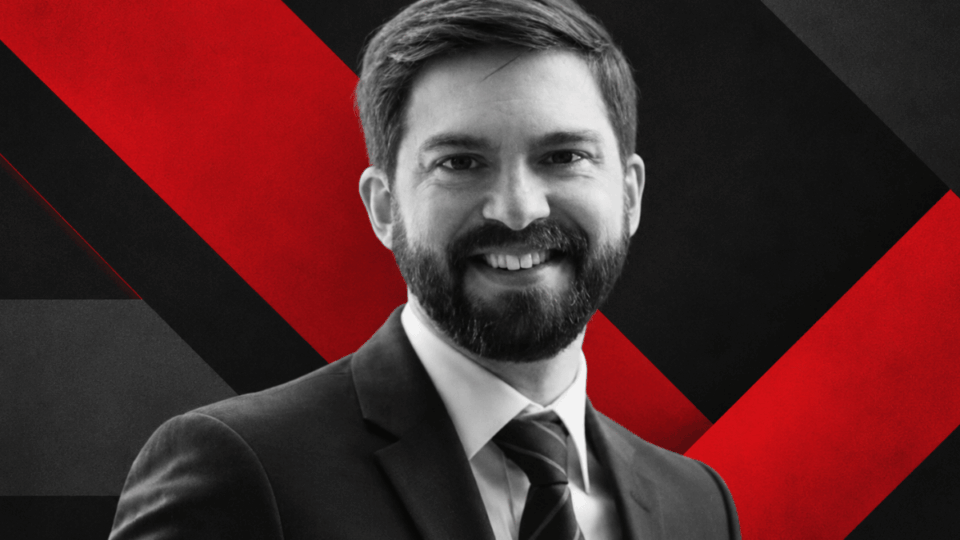
In an exclusive interview with Gambling Good, Harper warned that when official results diverge from market expectations, the odds on prediction markets could become ammunition for candidates and their supporters to allege election fraud.
“These platforms are playing fast and loose with American democracy.” — Tim Harper, lead for the CDT’s elections project.
The concern is that voters might mistake financial forecasts for something akin to official results, forcing election administrators to explain why the actual vote count—somewhat awkwardly—did not align with the odds.
“These platforms are major players in the election information space,” Harper said, accusing the companies of being “incredibly reckless and cavalier with American democracy.”
He argues that platforms like Kalshi and Polymarket should be held accountable for the spread of election-related misinformation—including content disseminated through their paid promotional partnerships—rather than leaving the burden to election officials and fact-checkers.
CDT Warning: Losing an Election Bet Could Fuel Fraud Allegations
Harper is most concerned about the period immediately following the close of polls. With millions of ballots yet to be counted, a candidate favored by prediction markets could see their odds evaporate as official results come in.
“We are in an environment where trust in elections is already on the decline,” he said. “These markets can play a significant role in shaping public confidence in election outcomes.”
Research from the CDT, released on October 29, indicates that voters are already confused about what prediction markets actually measure.
Nearly 40% of likely voters believe that the odds reflect ballots already counted or official projections, while 38% stated that a discrepancy between market expectations and official results would diminish their confidence in the election outcome.
A candidate trading at 90 cents might appear to have a near-certain victory—especially to those unfamiliar with how these markets function. However, this price is determined solely by what traders are willing to pay, not by the number of votes actually cast or the projections of election officials.
Harper warns that candidates could exploit this confusion, pointing to earlier market prices as “evidence” of fraud. “We might see candidates claiming, ‘I should have won’ or ‘I’ve already won.’ They could point to what the prediction markets were saying—even if the official results tell a different story.”
On election night, vote tallies often shift as more ballots are counted, particularly in tightly contested races. Harper worries that candidates might exploit earlier betting odds to cast doubt on these shifts, further eroding their supporters’ trust in the final vote count.
A dispute over election betting in Los Angeles sheds light on how allegations of fraud can spread.
Harper points to the June Los Angeles mayoral primary, where reality TV star Spencer Pratt received significant backing on the prediction platform Kalshi—even though polls and news reports suggested he had little chance of winning.
When the election results failed to align with market expectations, claims of electoral fraud began circulating online.
The Anti-Corruption Data Collective (ACDC), in collaboration with CNBC, examined how traders on Kalshi reacted to unfavorable polling data and news reports concerning Pratt. While the price of shares in his candidacy rebounded repeatedly after dips, researchers could not determine whether traders genuinely expected Pratt to perform better or were simply attempting to create that impression.
Prediction markets thrive on the growing polarization of the electorate; when people feel strongly about an issue—and have a financial stake in it—they are more inclined to spend additional money to validate their own viewpoint.
When election outcomes diverge from expectations, some online influencers have alleged that the election was rigged. According to the ACDC, certain influencers who spread such rumors maintained business relationships with prediction market operators or their partners.
Following an investigation by the ACDC, Kalshi requested that several influencers remove posts that violated its affiliate marketing policies. This has raised questions about whether such platforms can effectively distinguish between their own promotional interests and the election-related narratives disseminated by their paid partners.
“These platforms should be held accountable for the paid partnerships they establish with influencers who spread misinformation and disinformation regarding elections,” Harper told Gambling Good. He stated that the existing rules at these companies are insufficient to address the issue of misinformation spread through paid promotional content.
This case in Los Angeles is particularly relevant to the midterm elections, as the allegations emerged following outcomes that defied market expectations. Harper fears that a similar pattern could play out in congressional elections, with losing candidates potentially citing earlier betting odds to cast doubt on the election results.
Information regarding California ballots posted by Polymarket lacked critical context.
Both Kalshi and Polymarket also share election-related news via their social media accounts, with posts reaching hundreds of thousands of people.
Harper is concerned that some of these updates omit vital information—especially when reporting on alleged voting irregularities.
He specifically pointed to a post by Polymarket on October 21, which stated: “Breaking: Thousands of California voters reportedly received duplicate ballots for the November 3 midterm elections.”
A review of the post by Gambling Good shows it garnered approximately 463,400 views, 2,000 reposts, and 7,900 likes.
While duplicate ballots were indeed issued, election officials had already identified the issue. According to the Los Angeles Times, 7,791 voters in Tulare County received extra ballots due to an error by a private printing vendor.
Officials instructed the affected voters to destroy the duplicate ballots and explained that security measures were in place to prevent multiple votes from being cast. Barcodes on ballot envelopes, combined with cross-referencing against voter records, are designed to ensure that each voter can submit only one valid ballot.
On November 2, the Supreme Court rejected an emergency request from the Trump administration to set aside mail-in ballots that it claimed were cast by non-citizens. California officials had questioned the accuracy of the list provided by the administration, and lower courts had previously dismissed the request for intervention.
Polymarket’s statement made no mention of these details. Although the company has not accused anyone of fraud, Harper argues that reporting on duplicate ballots without explaining the steps taken by officials could fuel baseless suspicions regarding election results.
“Some of the content they’ve posted in recent days is deeply concerning because it lacks any context,” he said.
He questioned why a platform with such a large audience would publish election updates without including information that helps readers understand what is actually happening.
By the time a correction or explanation reaches voters, the original post may have already been shared thousands of times.
For Harper, this is particularly troubling when the subject is election fraud—especially given that the publishers have a commercial interest in capturing the attention of the political market.
A transaction worth as little as $3,500 could shift the landscape before the vote count is even complete.
When relatively small trades can alter the odds presented to the public, the potential for market signals to be misleading becomes significant. A new study released by ACDC ahead of the midterm elections analyzed 28,845 congressional election markets across the Kalshi, Polymarket, and Polymarket US platforms—markets that, as of October 29, had seen a total trading volume of $431 million.
The researchers found that for 96% of the 15,985 valid congressional trade orders, a capital outlay of $3,500 or less was sufficient to shift the price by 5 cents. In 66% of these markets, it cost less than $100 to move the price by 5 cents, indicating that in many smaller-scale markets, only a modest amount of capital is needed to alter the implied probabilities.
While the study does not show that anyone intentionally manipulated election odds to influence voters, it does demonstrate that traders do not necessarily need large sums of money to cause significant changes in the prices displayed on these platforms.
Harper noted that while identifying suspicious trades is one thing, proving that someone intended to influence an election is far more difficult. “More research is needed to truly establish this,” he explained, noting that the attribution of coordinated influence campaigns often only becomes clear long after an election has concluded.
He worries that before the reasons behind price fluctuations are understood, political campaigns or the news media might exploit these shifts. If a candidate subsequently loses, the earlier odds could then be circulated as “proof” that the election outcome was incorrect.
Harper also challenges the notion that “prediction market prices represent public opinion in the same way that election polls do.”
While pollsters attempt to gauge the views of voters, market prices are determined by traders—individuals whose motivations may be entirely different and who often have significant capital at their disposal.
Although Polymarket has stepped up its monitoring, questions regarding its potential role in election interference persist.
On October 27, Polymarket announced additional oversight measures for the election, outlining systems designed to detect price manipulation, coordinated trading, insider trading, and attempts to manufacture a misleading market consensus.
The company stated that it employs automated alerts, blockchain analysis, and manual investigations to monitor trading activity across its U.S. and international platforms.
In effect, this serves as a new channel for “dark money,” allowing foreign actors to funnel resources toward their preferred candidates.
Polymarket’s “PolyGraph” system integrates transaction records, blockchain data, internal monitoring models, and publicly available information to investigate suspicious activity.
The company noted that investigators assess whether unusual trades have a legitimate explanation—such as automated trading or market-making—before deciding whether to restrict an account or refer the matter to the authorities.
The announcement provides details on how Polymarket monitors trading, including the types of activity Harper has highlighted.
What remains unclear is how frequently the company’s systems identify organized political interference, what subsequent actions are taken, and whether the company can prevent misleading claims about the election—fueled by market data—from spreading beyond the trading platform itself.
“Prediction markets claim to have the monitoring tools to identify such behavior,” Harper said. He is seeking further clarity on how these companies investigate coordinated activity and whether any cases involving suspected election interference have been referred to the relevant authorities. He also raised questions about activities taking place on discussion forums affiliated with these markets, as well as on the companies’ own social media accounts.
While trade-monitoring systems may be capable of detecting suspicious transactions, they are not necessarily equipped to identify misleading claims—whether circulated among users or promoted to a broader audience.
Harper previously worked on political advertising policy at Meta, a company that has spent years investigating and taking enforcement action against election-related misinformation and coordinated influence campaigns.
He questioned whether prediction market firms have established similar procedures or hired enough specialized personnel to address election-related abuse.
Polymarket has stated that it has invested in dedicated monitoring staff and investigative tools; however, Harper’s concerns extend beyond mere trading misconduct. He wants these companies to explain how they handle election-related misinformation—especially when such information originates from their own accounts or from individuals paid to promote it.
Foreign traders could influence election narratives without violating platform rules.
Harper also expressed concern that foreign actors might leverage prediction markets to shape public perception of U.S. elections.
He noted that in smaller-scale congressional races—where polling data is limited and trading volume is low—it is easier for individuals to manipulate the market to make a specific candidate appear more likely to win.
If a platform permits foreign participants to trade, those participants do not necessarily need to conceal their identities.
“Know Your Customer (KYC) protocols are only effective when someone violates your terms and rules,” Harper remarked, arguing that identity verification offers limited protection against activities that are explicitly permitted by the platform.
Polymarket US restricts participation to eligible U.S. users, while international users can engage with contracts related to U.S. elections via Polymarket’s separate global platform—subject to jurisdictional restrictions.
Harper suggests that foreign actors could manipulate market prices to make their preferred candidates appear more likely to succeed, potentially influencing campaign messaging or media coverage.
He views this as a potential new avenue for foreign political influence and questions whether the existing rules on these platforms are sufficient to prevent such scenarios.
Nevertheless, there is a significant distinction between election-related trading and the illegal financing of political campaigns. Neither Harper’s interview nor the ACDC research provides evidence that foreign governments have used prediction markets to make illegal contributions to U.S. political candidates.
The latest ACDC report also warns of foreign interference, yet it points to no concrete evidence of coordinated efforts to influence the 2026 midterm elections via prediction markets.
Researchers note that identifying the parties behind specific trades remains difficult—especially when multiple accounts are involved or when trading patterns could be explained in various ways.
Election-related betting may face heightened congressional scrutiny following the midterm elections.
Harper argues that the consequences of election betting extend well beyond the financial risks typically associated with conventional gambling. “Sports betting can cause significant financial harm to individuals,” he says, “but election betting can inflict losses not just on individuals, but on society as a whole.”
He questions whether the Commodity Futures Trading Commission (CFTC) has adequately vetted these risks before approving election-related contracts. Harper is particularly critical of how new contracts often emerge rapidly following political events, suggesting that regulators may lack sufficient time to fully consider their potential impact.
“Their regulators could arguably be described as ‘captured’—in some instances, acting more as allies than as overseers.”
Harper also criticizes the industry’s lobbying efforts and questions whether the CFTC has taken a sufficiently firm stance toward prediction market operators.
While he implies that regulators sometimes act more like industry allies, he offers no evidence of illegal conduct or improper influence exerted over regulatory decision-making.
The outcome of the midterm elections could determine whether executives in the prediction market industry face tougher questioning in Washington. Harper suggests that a shift in congressional control could grant Democrats greater authority to investigate the sector, though he stops short of predicting whether new legislation will be introduced.
“If control of Congress changes and Democrats gain investigative powers—including the authority to issue committee subpoenas—I suspect we might see oversight hearings focused on these risks,” he says. ”
He is not entirely certain whether lawmakers from both parties will be able to reach an agreement on legislation, noting that the political landscape will become clearer once the election results are officially certified.
Harper’s primary concern at the moment is what might unfold between election night and the formal certification, as losing candidates could seek various pretexts to challenge the vote count. If they were to cite odds from prediction markets as evidence, election officials might find themselves in the position of having to explain not only the vote tallies but also why the betting markets’ forecasts proved incorrect.
According to Tim Harper, who leads the Elections and Democracy project at the Center for Democracy & Technology (CDT), the repercussions of election-related wagering on prediction markets could extend well beyond the financial losses incurred by disgruntled traders.